

You know me: If it’s got Guinness stout in it, chances are, I’m gonna love it. This mustard is no exception.
It’s earthy, salty, and tangy—and totally my new favorite thing to spread on sandwiches and burgers. I think it would be great in BBQ marinades, too.
Thank to the good folks at Saveur magazine for the recipe. It’s definitely a keeper.
The process couldn’t be easier. It takes two or three days to make, but there’s about 15 minutes of active cooking time (if that).
Basically, you combine all the ingredients, then let them sit on the counter for one or two days to mingle. During that time, the mustard seeds soak up all that good stout and vinegar, which softens them up.
Then, you whizz the whole mess up in the food processor for about 3 minutes to thicken it, and…voila! Homemade Guinness mustard.
Your beer loving friends will think you’re a hero.
Warning: This recipe makes a lot of mustard
As in, three-and-a-half cups of it.
For comparison, a regular-size jar of Grey Poupon holds 8 oz.—or one cup—of mustard.
So, if you don’t think you’re going to go through it (or don’t plan on passing out your homemade concoction to your friends), I’d recommend cutting the recipe in half.
That said, it does last. The mustard will keep for about six months in the fridge. I packed mine into a couple pint-sized canning jars.
About mustard seeds
OK, there’s more to it than this, but here are the basics about mustard seeds.
There are three main types of mustard seeds: White (sinapis alba, often referred to as yellow), brown (brassica juncea), and black (brassica nigra).

Most grocery stores will carry the yellow type. Use the yellow or the brown to make this mustard. If you can’t find them in person, Penzey’s is a great source for spices.

Mustard in history and legend
- In Latin, the word mustard is “mustum ardems,” which means “burning must.”
- The mustard plant is in the same family as wasabi, watercress, horseradish, and arugula—all of which get their burn from a group of chemicals known as isothiocyanates. The plant is really hearty, and can thrive almost anywhere.

- Mustard has been used medicinally since ancient times. Mustard plasters can increase breathing for a congested person and also relieve swelling by increasing blood flow to the surface of the skin.
- Young mustard greens add a sharp bite to salads and sandwiches.
- The Chinese considered mustard to be an aphrodisiac.
- German women sewed mustard seeds into the hems of their wedding gowns to help assure they’d keep the upper hand over their husbands.
Alrighty! Let’s get to it!

Spicy Guinness Mustard
1 1/2 cups Guinness Extra Stout
1 1/2 cups yellow mustard seeds (about 10 oz.)
1 cup red wine vinegar
1 tbsp. kosher salt
1 tsp. freshly ground black pepper
1/4 tsp. ground cinnamon
1/4 tsp. ground cloves
1/4 tsp. ground nutmeg
1/4 tsp. ground allspice
1/4 tsp. ground ginger
Makes about 3 1/2 cups of mustard
Make the mustard mixture
Crack open your Guinness. (Mmmm…)

Use the extra stout, the regular kind, or substitute your favorite stout.

Measure it out.

One thing to note: Check your measurement once the foamy head subsides a little bit to be sure you have an accurate amount.

(Liquid to solid proportions are important in this recipe, because they govern how thick/thin your mustard will be. Too much beer = runny mustard. Not enough beer = super thick.)

Pour it into a medium-sized, non-reactive bowl. (“Non-reactive” means that your bowl is made out of a material that won’t react with acid. Use ceramic, glass, enamel, or stainless steel. Avoid aluminum.)

(You know I didn’t let that leftover Guinness go to waste…)

Add your red wine vinegar to the bowl. I used Colavita brand, but any will do. As with most condiments and sauces, the better flavor your ingredients, the better flavor your end product.


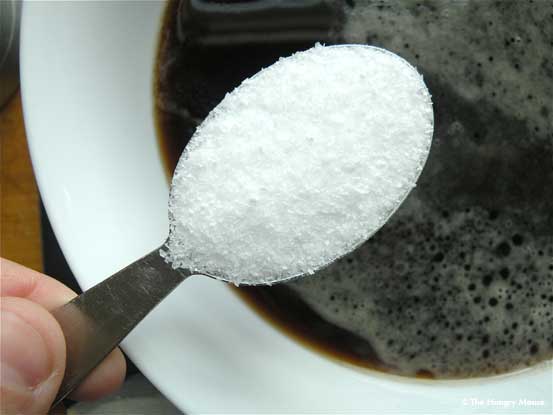
Toss in the salt, pepper, and all the spices.


This recipe makes a nicely—but not overly—spiced mustard. Adjust the spices up or down (or add others) to suit your taste.

Whisk together gently (the stout will still be nice and bubbly and you don’t want a mess…) until the mixture is fairly uniform.

Toss in the mustard seeds.


And whisk to incorporate.

Let the mustard age for a few days
Cover with plastic wrap. Set the bowl on your counter and let it sit, undisturbed, for one or two days. (I let mine age for 2 days.) This is to let the seeds soften up so you can pulverize them.

Process the mustard
After a day or two, your mustard seeds should have soaked up a lot of the liquid. That’s just fine. (In fact, that’s what you want. It means that the seeds are softer now.)

Toss the contents of your bowl into your food processor. I’m guessing you could also do this, in batches, in a good (i.e. powerful) blender, though I haven’t tried it.

Process for about 3 minutes.

As the seeds break down, the mixture will get thicker. Scrape down the sides of the bowl, if need be.

Stop a few times to check the thickness. When you’re happy with how thick it is, stop.

I was aiming for a very thick mustard, like this:

Package and enjoy!
Spoon the mustard out into prepared (i.e. very clean) jars or a bowl. Keep the mustard in the fridge. It’ll be good for about six months. That is, if it lasts that long.

Enjoy!
Calories
Carbs

The Hungry Mouse
Yields About 3 1/2 cups
This mustard is earthy, salty, and tangy—and totally my new favorite thing to spread on sandwiches and burgers. I think it would be great in BBQ marinades, too. The process couldn't be easier. It takes two or three days to make, but there's about 15 minutes of active cooking time (if that).
 Save Recipe
Ingredients
Instructions
- Pour the stout into a medium-sized, non-reactive bowl. ("Non-reactive" means that your bowl is made out of a material that won't react with acid. Use ceramic, glass, enamel, or stainless steel. Avoid aluminum.)
- Add your red wine vinegar to the bowl.
- Toss in the salt, pepper, and all the spices.
- Whisk together gently (the stout will still be nice and bubbly and you don't want a mess...) until the mixture is fairly uniform.
- Toss in the mustard seeds. Whisk to incorporate.
- Cover with plastic wrap. Set the bowl on your counter and let it sit, undisturbed, for one or two days. This is to let the seeds soften up so you can pulverize them. After a day or two, your mustard seeds should have soaked up a lot of the liquid. That's just fine. (In fact, that's what you want. It means that the seeds are softer now.)
- Toss the contents of your bowl into your food processor.
- Process for about 3 minutes. As the seeds break down, the mixture will get thicker. Scrape down the sides of the bowl, if need be. Stop a few times to check the thickness. When you're happy with how thick it is, stop.
- Spoon the mustard out into sterilized jars or a clean bowl. Keep the mustard in the fridge. It'll be good for about six months. That is, if it lasts that long.