

Updated: December 29, 2021. Prime Rib: It’s not just for Christmas dinner. This post will teach you how to make succulent restaurant-style prime rib that’s perfect for any occasion.
I’ll make this whenever I can get my paws on one at a good price (or the rare super sale). It’s a great excuse to have a party. In fact, if you’re sick of ham on Easter, consider giving Roast Beast it’s day in the (springtime) sun.
This is a restaurant technique that’s practically guaranteed to produce a moist, juicy, evenly cooked roast beast. And it couldn’t be simpler.
Seriously.
How to buy prime rib
Prime rib is expensive, so you want to be sure you get the best meat for your dollar. You’ll find it sold two ways: bone in, or boneless. I prefer the bone-in roasts. I think they taste better. They also make a slightly more impressive table presentation. Boneless roasts cook a little faster, so keep that in mind as it’s roasting.

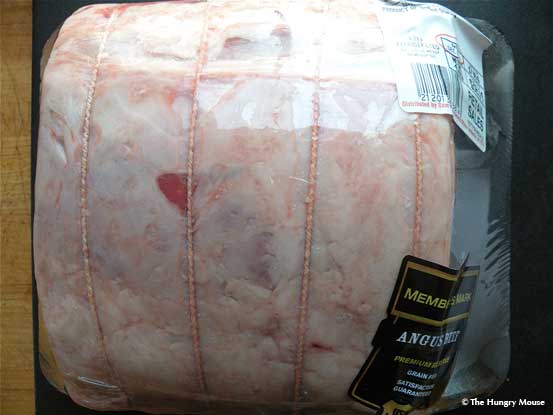
Look for a roast with a layer of creamy white fat on the top. You’re going to roast your beast fat-side up, so the fat bastes the meat as it melts. The roast should be tied (though you can do this yourself at home) to keep its nice, plump shape as it cooks.

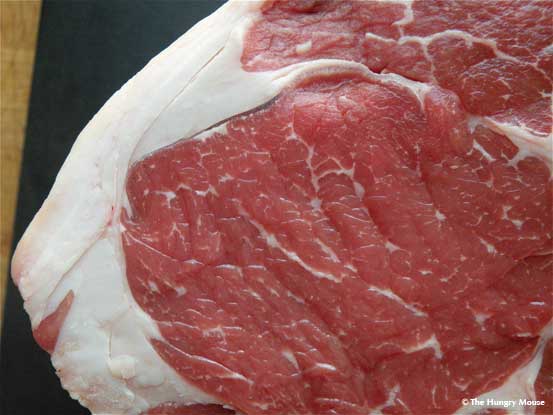
The flesh should be bright red and the fat should be firm and white.

Look for good marbling, if you can find it. Marbling = those skinny little strips of white fat shot through the meat. Most of it will melt as the meat roasts, contributing rich, beefy flavor.

Many butchers will have some pre-cut and wrapped in the case, especially around the holidays. If you don’t like the look of the ones they have out, ask your butcher to cut a fresh one for you. Depending on your market, you might need to special order one.
I’ve said it before: Find a butcher and make friends with him. You can thank me later.
What size roast do you need?
When you order prime rib at a restaurant, normally you’ll get one whole rib, so you wind up with a brontosaurus-sized steak.
You can certainly cut one rib per person, but that can be a lot of meat for one, especially if you’re serving other stuff. Plus, that can get pricey fast.
I prefer to carve the ribs off, then cut the boneless roast into thinner slices. You’ll be able to feed a lot more people that way. If you go that route:
Count on (raw weight):
4 lbs. for 3-4 people
5 lbs. for 4-5 people
6 lbs. for 5-6 people
7 lbs. for 6-7 people
10 lbs. for 8-10 people
14 lbs. for 10-12 people
The short version of the recipe goes like this
Sear the meat quickly on all sides on top of the stove to develop flavor and color. Then roast it slowly in a 250-degree oven for a few hours. It seems too low, but trust me, it’ll cook.

Most prime rib recipes will give you a roast that looks kind of like a bulls-eye: Brown on the outside, pink in the center. This method of cooking (at a low temperature for a long time) gives you a roast that’s evenly cooked through and through, so every bit of every slice is just the way you like it.

This is a basic recipe that lets the rich, beefy flavor of the meat shine through. If you like, rub the roast with a little garlic, rosemary, and powdered bay leaf after you sear it (so you don’t burn the spices). You get the picture.
Restaurant-Style Prime Rib Roast
1 (5-7 lb.) prime rib
kosher salt
freshly cracked black pepper
olive oil
Prep the beast
Grab your roast. Give him a quick rinse under cold water and pat him dry with paper towels. Get him very, very, very dry. If you don’t, he won’t sear well (water inhibits browning…the meat will kind of steam instead of brown)…

Next, smear him with olive oil. I use pure olive oil, not extra virgin, because it has a higher smoke point. (Plus, virgin and extra virgin olive oil are best saved for finishing and drizzling, not cooking, so their grassy flavor can shine through. Heat basically destroys that.)

Sprinkle him generously on all sides with kosher salt and freshly cracked black pepper.

Be sure to get all sides, including both ends.


Sear the beast
Throw open a window and grab a fan, because there’s gonna be smoke. Preheat your oven to 250 degrees.
Next, put a little olive oil in a large, heavy bottomed skillet. Roll the pan around so that the bottom is coated. Set it on the stove over high heat. When the oil starts to shimmer, it’s hot enough for your meat.

Put the meat in the pan. It doesn’t really matter which side you start with because you’re going to do all sides.

When he’s brown on one side, flip him over.

Keep flipping him until he’s brown on all sides.


Roast the beast
When your beast is brown on all sides, remove him from the pan. Place a rack in a roasting pan. Set the meat on the rack, fat-side up. This is important. You want the fat-side up, so that the fat melts as the meat roasts and bastes it.


Pop him into your pre-heated 250-degree oven.

Roast for 3 – 3/12 hours until he registers at least 120 degrees on a meat thermometer.
When is it done?
Most roasts will increase in temperature dramatically once they come out of the oven. Usually, the hotter the oven, the more your temperature will rise.
This “carry-over†cooking means you have to be very mindful of when you yank the beast out of the oven. It also means that the doneness is hard to get right. (Raise your hand if you’ve ever blown the timing on a roast. I know I have.)
Not so with this method. Because the meat is roasted at such a low temperature, it should only increase a few degrees.
It’s a more reliable way to roast a prime rib, and makes timing your meal a lot easier.
Temperature chart
121°-125° F = rare
130°-135° F = medium-rare
140° F = medium
150° F = medium-well
160° F = well done

Be sure to get the meat thermometer into the center of the roast, not touching any bones (that will skew your reading).


Tent your roast under aluminum foil for 15-20 minutes. (Tent means loosely drape and tuck a little, don’t wrap it airtight.) This will let the juices settle back into the roast.

Slice, serve, inhale!
After your roast has rested, transfer it to a serving platter. Carve it up however you like. Thick slices. Paper thin slices. Whole ribs, if you got a bone-in beast.

Enjoy!
The Hungry Mouse
This is a restaurant technique that produces a moist, juicy, evenly cooked roast beast. And it couldn’t be simpler.
 Save Recipe
Ingredients
Instructions
- Grab your roast. Give him a quick rinse under cold water and pat him dry with paper towels. Get him very, very, very dry.
- Smear him with olive oil.
- Sprinkle him generously on all sides with kosher salt and freshly cracked black pepper.
- Throw open a window and grab a fan, because there’s gonna be smoke. Preheat your oven to 250 degrees.
- Put a little olive oil in a large, heavy bottomed skillet. Roll the pan around so that the bottom is coated. Set it on the stove over high heat. When the oil starts to shimmer, it’s hot enough for your meat.
- Sear the meat on all sides (don't forget the ends).
- When your beast is brown on all sides, remove him from the pan. Place a rack in a roasting pan. Set the meat on the rack, fat-side up. This is important. You want the fat-side up, so that the fat melts as the meat roasts and bastes it.
- Pop him into your pre-heated 250-degree oven.
- Roast for 3 – 3/12 hours until he registers at least 120 degrees on a meat thermometer.
- Tent your roast under aluminum foil for 15-20 minutes. (Tent means loosely drape and tuck a little, don’t wrap it airtight.) This will let the juices settle back into the roast.
- After your roast has rested, transfer it to a serving platter. Enjoy!